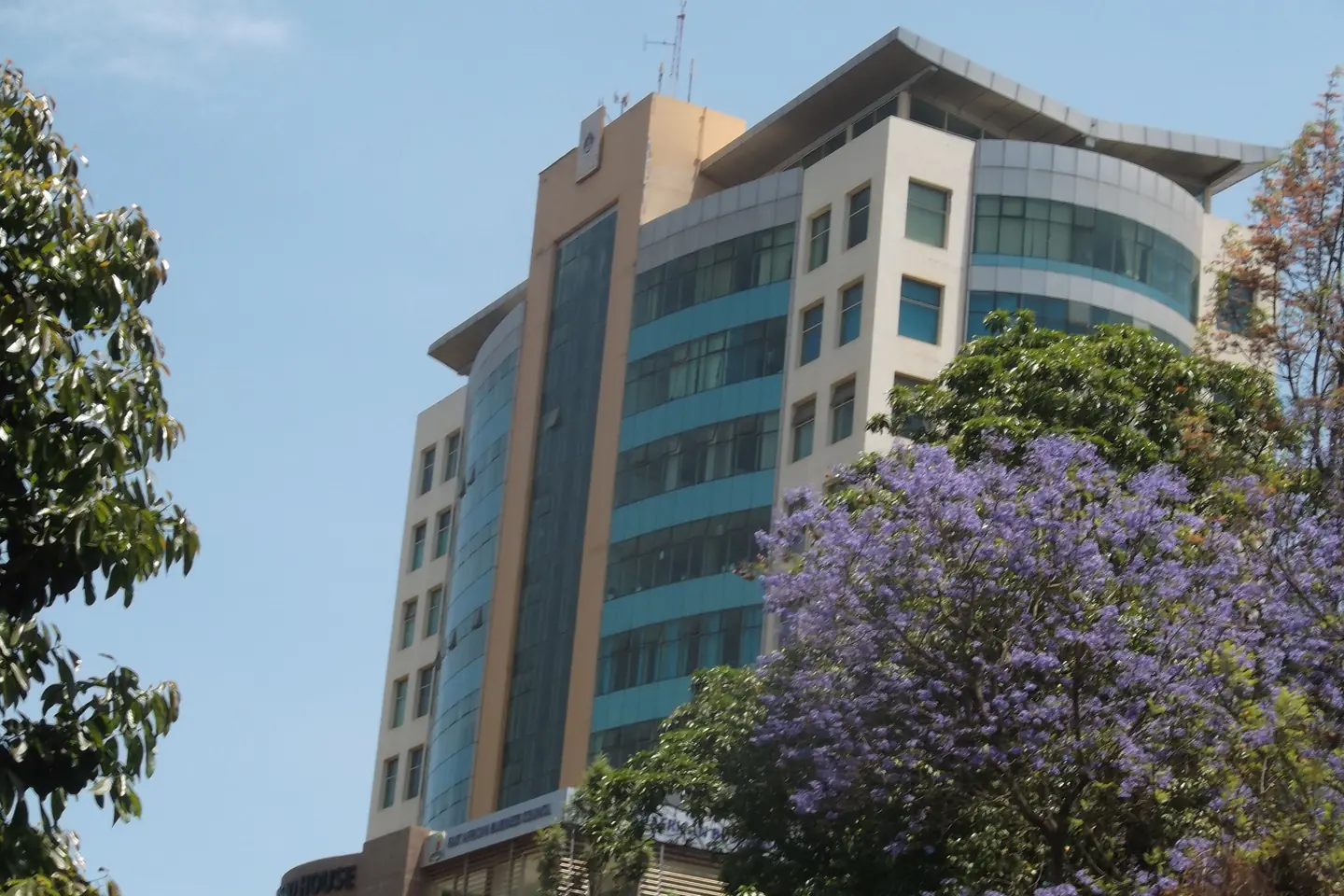
Photo: Idd ninga, CC BY-SA 4.0, via Wikimedia Commons
Who NSSF covers
The National Social Security Fund Act (Cap. 50) applies on Tanzania Mainland to people who are employed in the private sector, self-employed people, foreigners employed on the Mainland, and people employed by international organisations operating on the Mainland. NSSF describes its mandate as covering the private and self-employed sectors.
Public servants on the Mainland belong to a different fund, the Public Service Social Security Fund (PSSSF). If you work in Zanzibar, ask your employer which fund applies to you. The rest of this guide is about NSSF.
Registration: your employer's duty
An employer registered with NSSF must, without delay, register every person who is or becomes its employee as an insured person. NSSF says employees from the age of 18 up to 60 are eligible for registration. New members are registered using their National Identification Number (NIN) from NIDA, and the employee fills in form NSSF/R.3A through a registered employer. NSSF also has a route for registering members who do not yet have a NIN.
Once registered, you receive an NSSF registration number. Keep it with your other work documents. When you change jobs, give the same number to your new employer, so that all your contributions are recorded against one membership.
How much is contributed
NSSF says every registered employer must pay the Fund 20% of the employee's wage as a joint contribution. The employee's share must not be more than 10% of the monthly wage. NSSF names two arrangements:
- 10% from the employer and 10% from the employee; or
- 15% from the employer and 5% from the employee.
The employer may also choose to pay the whole 20% without deducting anything from your wage. The First Schedule of the Act sets the statutory contribution at twenty cents for every complete shilling of wages.
Your share deducted from pay: 10% = TZS 80,000.
Employer's share on top: 10% = TZS 80,000.
Total paid to NSSF for the month: TZS 160,000.
The wage in this example is invented for the calculation. Your payslip should show your own share as a deduction. The employer's share is a cost to the employer and should not reduce your pay.
When your employer must pay it in
Your employer deducts your share from your wages for the period the contribution covers. If the employer missed a deduction, the Act allows it to be recovered from wages within six months after that period, in at least four roughly equal instalments, unless you agree to fewer.
Every contribution must reach the Fund within one month after the end of the month it relates to. If it is late, a penalty of 5% of the unpaid amount is added for each month or part of a month, and recovered from the employer as a debt. Once your share has been deducted, the employer holds it in trust for the Fund. Where the Director General is satisfied that your share was deducted but the employer failed to pay it, the Act allows those contributions to be treated as wholly or partly paid for your benefit.
Contributions and your tax
TRA's PAYE guidance says contributions to approved retirement funds are taken off gross pay before PAYE is calculated, up to the limits it describes. In practice, your NSSF share lowers your taxable pay. That is why a payslip usually shows the NSSF deduction before PAYE. See how a payslip is worked out, or try the take-home pay calculator.
What your contributions build
NSSF lists these benefits on its website: old age pension, survivors' pension, invalidity pension, unemployment benefit, maternity benefit, funeral grant and a social health benefit. Each has its own conditions. Three matter most for younger workers.
Old age pension. NSSF says a retirement pension is paid to a member who has reached pensionable age, or is 55 or older, and has at least 180 monthly contributions. That is fifteen years of contributions, which is why gaps matter.
Unemployment benefit. Under section 41 of the Act, a member who stops being employed may receive unemployment benefit if the member has contributed for at least eighteen months, lost the job for a reason other than resignation, is a citizen, does not qualify for a pension or other long-term benefit under the Act, has not found another job, and is below 55. NSSF says a member who stops work with less than eighteen months of contributions receives 50% of the total contributions instead. It also says you should claim within six months of leaving work.
Maternity benefit. NSSF says a female member needs at least 36 monthly contributions, 12 of them in the 36 months before the expected week of birth. The cash benefit is paid for twelve weeks at 100% of average insurable daily earnings, in two instalments, and the claim must be made within 84 days of the birth.
Check that your money arrived
Do not wait until you leave a job to find out that contributions were not paid. Every few months:
- Compare the NSSF line on your payslip with your registration number and the amount you expect.
- Ask your employer for proof that contributions were paid for recent months.
- Ask NSSF for a statement of your contributions through an NSSF office or the contact details on nssf.go.tz.
- Make sure your name, date of birth and NIN match your NIDA records. NSSF uses form NSSF/R.3B, with a new NSSF/R.3A, to change a member's particulars.
If you find months missing, raise it with your employer in writing first and keep copies of your payslips. Then take your payslips and registration number to the nearest NSSF office.
When you change jobs
Your NSSF membership does not end when a job ends. Give your registration number to your new employer on day one, check your first payslip for the NSSF deduction, and confirm after a few months that the new employer's contributions are showing. If you become self-employed, the Act also covers self-employed people, so ask NSSF how to keep contributing.
Frequently asked questions
How much is NSSF deduction in Tanzania?
The total contribution is 20% of the wage. The employee's share cannot exceed 10%: NSSF names 10% employee with 10% employer, or 5% employee with 15% employer. The employer may pay all 20%.
When must my employer pay NSSF contributions?
Within one month after the end of the month the contribution relates to. Late payment adds a 5% penalty for each month or part of a month.
Can I get my NSSF money if I lose my job?
Section 41 provides unemployment benefit for members who meet its conditions, including at least eighteen months of contributions and leaving work for a reason other than resignation. NSSF says members with under eighteen months receive 50% of their total contributions.
Do public servants pay NSSF?
No. Public servants on Tanzania Mainland are covered by the Public Service Social Security Fund (PSSSF).
Sources and checks
Checked . Follow the original source for amendments.
- NSSF: payment of contributions and rates ↗
- National Social Security Fund Act, Cap. 50 R.E. 2023 (sections 6, 11 to 15 and 41, First Schedule) ↗
- NSSF: registration of employees ↗
- NSSF: old age pension ↗
- NSSF: unemployment benefit ↗
- NSSF: maternity benefits ↗
- TRA: Pay As You Earn and retirement contributions ↗
- PSSSF: fund for public service employees ↗