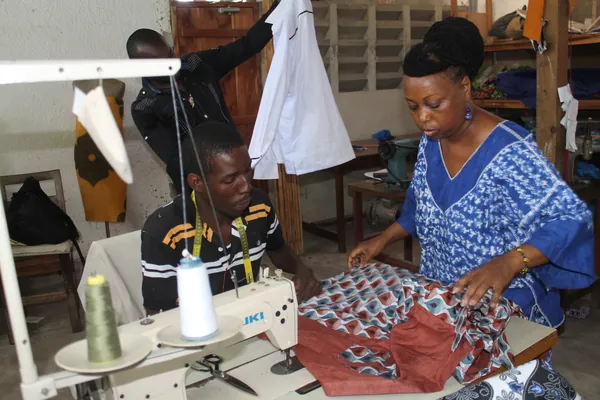
Photo: NotYetUhuru, CC BY-SA 4.0, via Wikimedia Commons
When paid leave starts
Paid leave under the Act starts after six months of service. An employee with less than six months of service is not entitled to paid leave under this part of the Act, with two exceptions: seasonal employees are covered, and an employee who has worked for the same employer more than once in a year qualifies if the total time worked for that employer in that year exceeds six months.
The Act counts leave in cycles. For annual leave, the cycle is 12 months of consecutive employment. For sick, maternity, paternity and compassionate leave, the cycle is 36 months. Your employer may agree a standard leave cycle with you, as long as your entitlement is not reduced. Paid leave is calculated on your basic wage.
Annual leave: at least 28 days
Your employer must give you at least 28 consecutive days of annual leave in each 12-month cycle. Public holidays that fall during your leave count as part of the 28 days. The total can be reduced by any paid occasional leave the employer granted at your request during the cycle.
The employer may decide when you take the leave, but it must be taken no later than six months after the end of the cycle. That can be extended to twelve months only if you agree and the employer's operational needs justify it. Before your leave starts, the employer must pay you what you would have earned if you had worked during that period.
Since 2015, an employer may, with your consent, ask you to work during annual leave, but you may not work through your leave for a continuous period of two years. If you are called to work during leave you are entitled to, the Act provides for one month's salary in lieu of that leave. The 2017 regulations add that your employer must make sure no employee works through a whole leave cycle without applying for annual leave.
Leave pay when you leave the job
When your employment ends, the employer must pay for annual leave you have built up and not taken. The pro rata amount is one day's basic wage for every 13 days you worked or were entitled to work. This does not apply to leave you failed to take within the time limits above. Seasonal employees receive the pro rata amount at the end of each season.
Sick leave: 126 days in a 36-month cycle
You are entitled to at least 126 days of sick leave in each 36-month cycle:
- the first 63 days on full wages;
- the next 63 days on half wages.
Your employer does not have to pay sick leave if you do not produce a medical certificate, or if you are entitled to paid sick leave under another law, fund or collective agreement. The certificate must come from a registered medical practitioner, or another practitioner the employer accepts. The employer may not refuse that acceptance unreasonably. Tell your supervisor as early as you can and keep a copy of every certificate you hand in.
Maternity leave
You must give your employer notice of your intention to take maternity leave at least three months before the expected date of birth, supported by a medical certificate. You may start maternity leave at any time from four weeks before the expected date, or earlier if a medical practitioner certifies that it is needed for your health or your baby's. You may not work during the six weeks after the birth unless a medical practitioner certifies that you are fit.
In each 36-month cycle you are entitled to at least:
- 84 days of paid maternity leave; or
- 100 days of paid maternity leave if you give birth to more than one child at the same time.
If the child dies within a year of birth, you are entitled to an additional 84 days of paid maternity leave in that cycle. An employer must grant paid maternity leave for up to four terms. At the end of maternity leave you may return to work on the same terms and conditions.
Premature babies: the 2025 change
The Labour Laws (Amendments) Act, 2025 added a rule for premature births. An employee who gives birth to a premature child is entitled to paid maternity leave from the date of birth until the pregnancy would have reached forty weeks, and then to the normal maternity leave on top of that, within the leave cycle.
Paid leave first covers the 8 weeks from the birth until the pregnancy would have reached 40 weeks.
The normal 84 days of paid maternity leave then follow.
Ask the hospital for a medical certificate that states the birth date and the stage of pregnancy, and give a copy to your employer.
Breastfeeding and safe work
If you are breastfeeding, your employer must allow you to feed your child during working hours for up to two hours a day. The 2017 regulations say this applies for at least six consecutive months after maternity leave. An employer must not require or allow a pregnant or nursing employee to do work that is hazardous to her or her child's health. Where the work is hazardous, the employer must offer suitable alternative work if practicable, on terms no less favourable. Pregnant employees may not be required to work at night in the two months before the expected birth, and new mothers may not be required to work at night for two months after the birth, subject to the medical certificate rules in the Act.
Paternity and compassionate leave
A father is entitled to at least 3 days of paid paternity leave in a leave cycle, taken within 7 days of the child's birth. Since 2025, it is 7 days in the case of a premature birth. The days are a total for the cycle, however many children are born in it.
You are also entitled to at least 4 days of paid leave in a cycle for the sickness or death of your child, or the death of your spouse, parent, grandparent, grandchild or sibling. Again, 4 days is the total for the cycle. Your employer may allow extra days for these events, but extra days are unpaid. Before paying for paternity or compassionate leave, the employer may ask for reasonable proof.
Unpaid leave and how to apply
Since 2025, the Act allows an employer to grant unpaid leave of up to thirty days on your written application, under conditions to be set in regulations. You and your employer may agree to extend it.
For any leave, follow your employer's leave procedure. The 2017 regulations say employees must comply with the procedure the employer sets for applying for annual leave. Apply in writing, keep a copy of the approval, and check your payslip after you return. One more protection: notice of termination cannot be given during leave taken under the Act. Read your notice rights.
Frequently asked questions
How many days of annual leave do I get in Tanzania?
At least 28 consecutive days in each 12-month leave cycle, counting any public holidays that fall within the leave, once you have six months of service.
Is sick leave paid?
Yes, with a medical certificate. The Act gives at least 126 days in a 36-month cycle: 63 days on full wages and 63 days on half wages.
How long is maternity leave for a premature baby?
Since the 2025 amendments, paid leave runs from the birth until the pregnancy would have reached forty weeks, followed by the normal maternity leave of 84 days, or 100 days for more than one child.
How many days of paternity leave do fathers get?
At least 3 paid days within 7 days of the birth, or 7 days for a premature birth since 2025.
Can my employer pay me instead of giving me annual leave?
Only in the situations the Act allows. Since 2015 you may work during annual leave with your consent, but not for two continuous years, and the Act provides one month's salary in lieu of leave you were entitled to or were called to work. On termination, untaken leave is paid pro rata.
Sources and checks
Checked . Follow the original source for amendments.
- Employment and Labour Relations Act, 2004 (sections 20 and 29 to 34) ↗
- Employment and Labour Laws (Miscellaneous Amendments) Act, 2015: annual leave, section 31 ↗
- Labour Laws (Amendments) Act, 2025: premature births, paternity leave and unpaid leave ↗
- Employment and Labour Relations (General) Regulations, 2017, GN 47: regulations 14 and 15 ↗